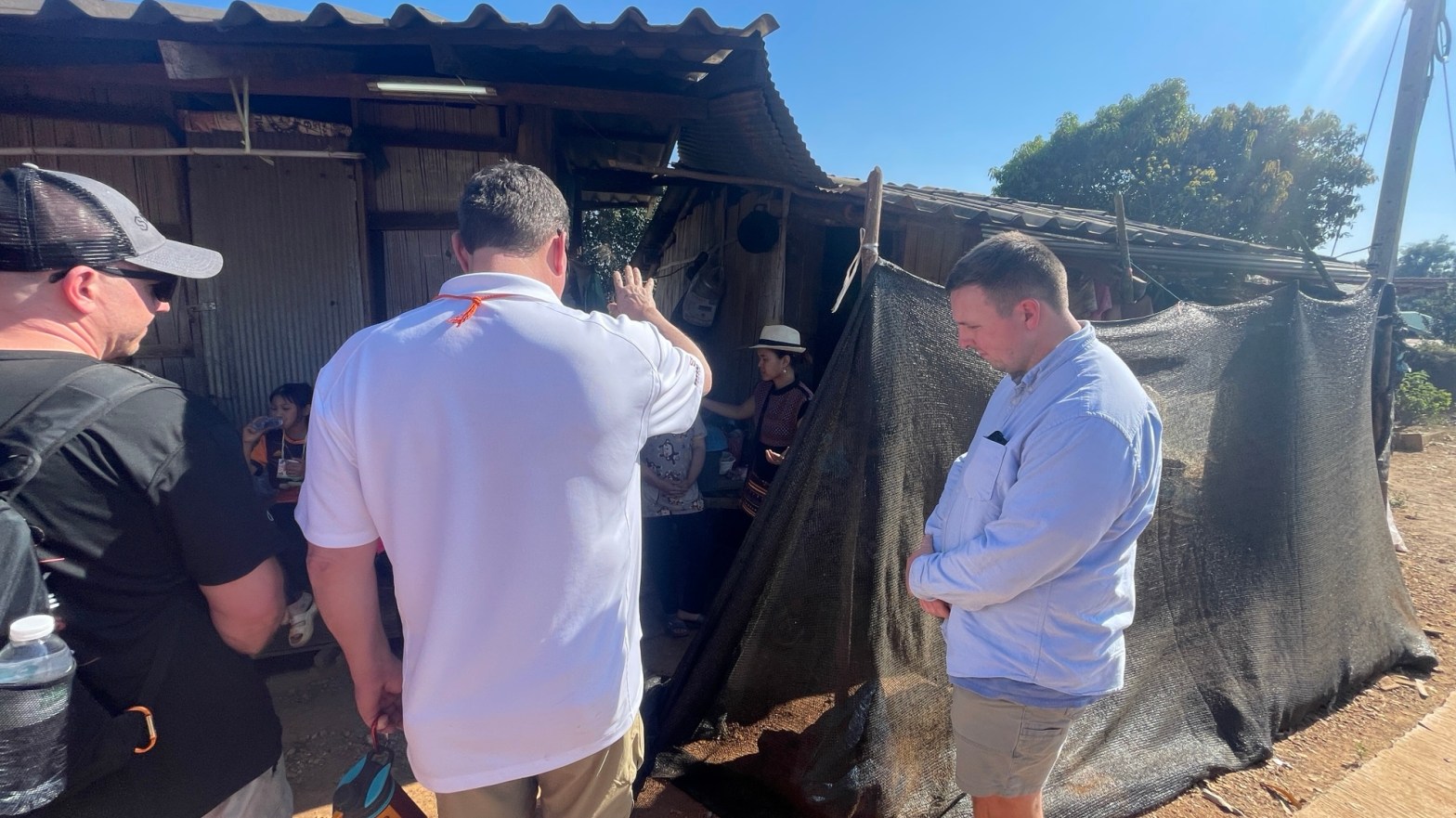
Before coming to Thailand, I thought that most of the kids at GROW were true orphans and without families. However, I quickly learned that most of them have some level of relationship with their parents and siblings. The children were often rescued from physical and sexual abuse, malnutrition and more, but most of their mothers and siblings remained in their villages. GROW traveled to the villages when possible to keep those connections alive and work with the families. If safety was not a concern, they would try to help the families in the hopes of reuniting the children with them one day. On our trip to the village, we were able to see the children embrace their parents and siblings after months apart, a touching experience.
Kiet was one of the eldest boys on campus at 14 years old. Most of the boys at GROW were more reserved and didn’t flock to us as easily as the girls did. They had a harder exterior, but that felt typical for teenage boys. As we approached Kiet’s home, I instantly watched his demeanor change. He went from a shy boy to a caretaker for his little sister. Sitting in the doorway with his arm around her, I watched this straight-faced teenager turn soft. He loved her so dearly.
Kiet’s mother was also a hard worker and trying to improve their situation. She explained her plans for adding a toilet to the house and asked our group for engineering expertise on where to put it. She explained she had saved $200 USD to date for the project – a huge amount considering the lack of income and resources there. She was determined to provide for her family. As we prayed over the area for the toilet, I had a strong sense the Lord would bless her for her determination. Yet, compared to my life in my oversized 1,200-square-foot house where my biggest complaint was ants in my kitchen, this lady had grit I could never pretend to know. All she wanted was clean water and a bathroom for her family, something I have had every day of my life and have rarely even thought to be thankful for.
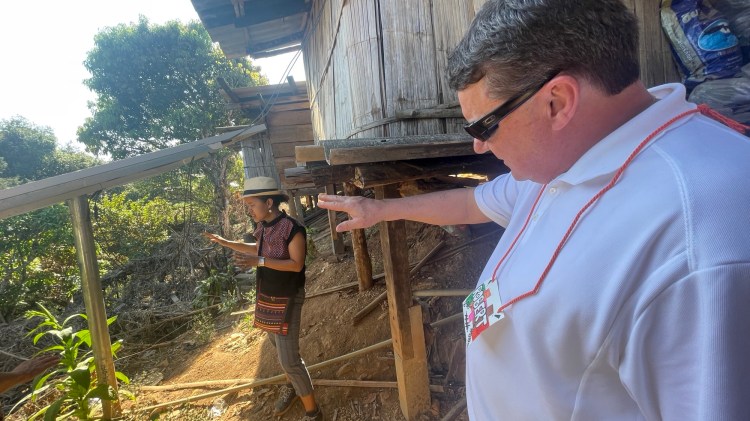
How sad of a world we live in, where people spend frivolous money on wasted extravagance and this family is dying for clean water and a toilet. Literally, people in this village and children are dying of malnutrition and lack of clean water. My heart hurts to think of it. My brain immediately goes to the amount of money I spent on new clothes for this trip alone, equivalent to more than this lady can save for a toilet. I am part of the problem, a problem that haunts me with these children’s faces who have lost hope.
Next, we came to Naiyana’s house, and the atmosphere was different. The love of her mother was immense. She clung to Naiyana and her little sister, holding them dearly. Naiyana’s father was present too, though he stayed in the background. My senses told me he was drunk or physically unaware of the happenings. But her mother patted Naiyana’s head and ran her hand down her hair just as I had done when I had cared for a little girl in my home for a few years. I saw true love and affection there.
We learned later that there have been a few times when GROW came to the village and couldn’t stop because the dad was drunk and they needed to make sure Naiyana, the GROW staff and other children would be safe. How disappointing those times must have been to Naiyana and her mother, who clearly missed each other. So many questions ran through my head as I took in the scene and chickens running around the yard. Was her mom abused? Her little sister? Was Naiyana abused as a little kid? Those thoughts hurt. This was the little girl who reminded me of myself and had an innocence that radiated from her. I knew she came from hardship, and now I received a glimpse of what that looked like.
Before long, her mom asked for a picture with all of us in front of her house. It was a request which we were happy to oblige but when I think about it, it feels odd. She wanted a picture of all of us. Why? I did so little here. I didn’t change her or Naiyana’s situation. Why did she want one with us? But nevertheless, we squeezed together as a group and smiled. Naiyana was so happy to have her new friends and family all in one spot. Maybe the reason was simply to grant her a little joy.
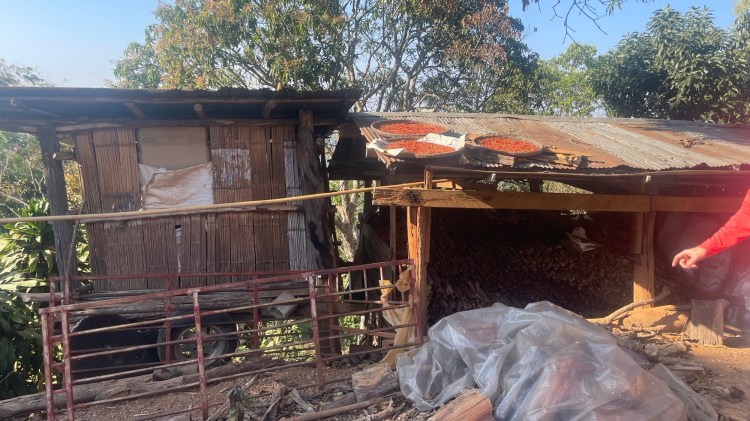
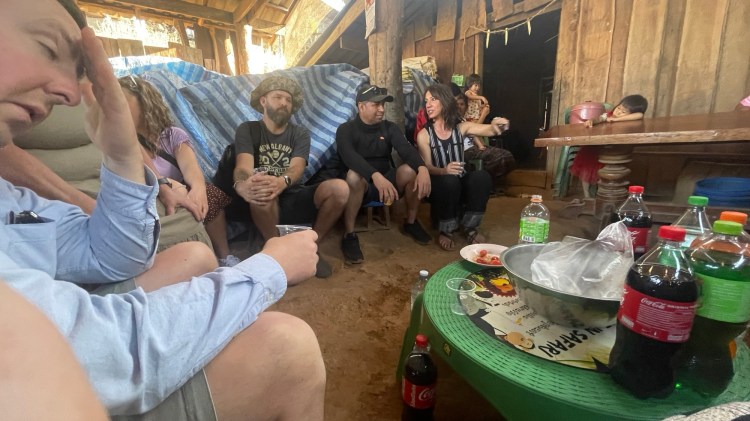
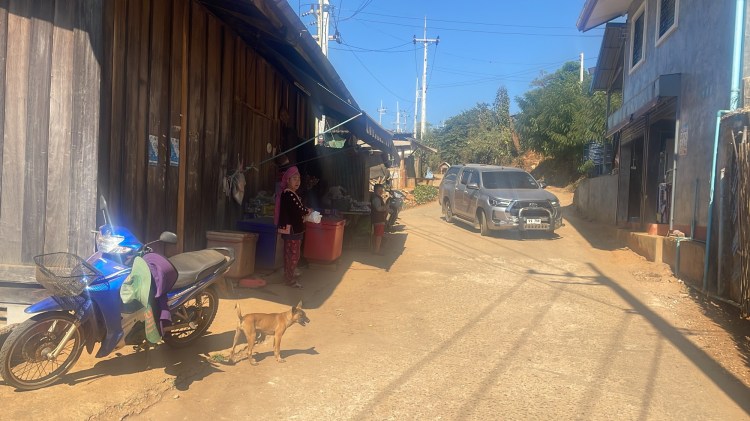
The last home we visited was Sud’s family, who were farmers. As we first walked up to the home, we saw peppers drying on the roof and various bags of crops lining the property. After passing the crop, we arrived at the heart of the home where they had pop, ice and small snacks prepared for us, a huge expense for their meager income. Ice was rare in Thailand, but they had made the trip to town to have some for their guests. We sat on small stools around a wooden table just outside the home, where we were passed a unique fruit I can barely describe. It was sour but topped with both spicy seasoning and sugar. Sour, sweet, and spicy all in one bite. It was quite a novelty for us Western folks and a huge display of hospitality, something we had repeatedly encountered in Thailand.
Sud’s mother shared with us that they farmed for a living to feed their family and others. We learned the family had fields of rice, opium, fruit and more. They were appreciative of GROW’s help and did what they could to thank them, such as using their truck to help haul our crew and the children to the village that day. Farming was hard work, and I could tell this lady was fierce, learning she hadn’t taken a day off in 6-10 years. Pure grit. I admired both her strength and hospitality. As we moved inside to pray, I realized the “abundance” of this home compared to others in the village was still very meager. Aside from their crop and a long, beautiful teak table, the rooms were bare. Yet, the family gave what they could to pay it forward. How our Western culture could use a dose of that mentality.
As the children grabbed my teammates’ hands and skipped back to the truck, I realized they looked at home here. Yet, my heart thought of my home and the abundance we waste in America. It first went to my physical abundance – my house with furniture and ample food – and then traveled to other areas I was blessed, such as being able to spend time with family and having a great faith that carried me through the hardship. How did these people get through without faith? How is it that people live in these conditions? It was hard to process and figure out what I could do to truly help, to make a difference here. The work GROW does to rescue children from terrible situations is of extreme importance, but I couldn’t help but feel it wasn’t a long-term solution. The problem was so much larger. There were too many kids and not enough space at GROW. How do you change their lot in the villages? How do you strengthen the villages and still keep the children with their parents (when safe)? They have so little, but there was something truly special about that village secluded on the mountainside. Life was slower, and there were families filled with love and a community that cared about each other. How could we truly help them without causing more brokenness? These are the questions that keep me up at night upon coming home.
The faces of the children left in the villages are engrained in my brain. They, too, haunt me at night. And yet, there are millions of children across the world who face the same lot. How do we right that wrong? How do we, a society of wealth, not care to help those with so much less? How have we become so numb? We can do more. We should. We must. We must love our neighbor better, even when that neighbor is a half of a world away. It is what God asks of each of us. I now have seen the problem, and there is no turning back. I cannot sit still. I hope you’ll get up and join me. Find a mission to help – whether it be donating to GROW or adopting a child from another organization or going on a mission trip to see it firsthand. Use your resources for God’s good. I beg you. Lives are dependent on it.
Discover more from Journey to Jireh
Subscribe to get the latest posts sent to your email.
